
In the modern world of hybrid work, bridging the gap between hardware and virtual space is vital. USB Redirector has become a key technology in this shift. It offers a smooth way to reach local tools from anywhere. Furthermore, by using a strong setup that often includes a USBManager Server for central control, companies are no longer stuck in one place. Whether you need a security key, a scanner, or a medical tool, USB Redirector makes it work. Consequently, it ensures that virtual machines and remote clients talk to these tools easily. In other words, it feels as if the device is plugged directly into the physical USB ports of the remote computer.
How USB Redirector Changes Connectivity
For a long time, using hardware in virtual spaces was hard. Specifically, if you logged into a cloud server, your local desk tools were “invisible” to it. USB Redirector fixed this problem. To achieve this, it creates a virtual path using the TCP IP protocol. This process is commonly called USB over IP. As a result, it takes data from the physical port and sends it over the network.
The best part of USB Redirector is its speed. For instance, it works with old USB 2.0 gear and fast USB 3.0 hardware. Because of this, it handles data transfer very well. By using USB Redirector, a company can keep all its hardware in one room. Then, staff can start sharing USB devices across the whole world. Ultimately, this saves both money and time.
Managing Hardware with USBManager Server
In a big office, managing many connected USB devices is tough. Therefore, using USB Redirector with a USBManager Server is a smart move. The server acts like a main device manager. In addition, it helps bosses manage USB access in one spot. For example, they can see which tools are on and who is using them.
When you use a USBManager Server with USB Redirector, you get many perks:
- Safe Access: You decide which remote clients can use high-value gear.
- Virtual Hubs: Similarly, you can use a virtual USB hub to group tools for different teams.
- Smart Sharing: Instead of buying many USB dongles, just put them on one Ethernet USB device server and share them.
Most of these setups use gigabit Ethernet. Consequently, USB devices over a network run very fast. Because there is almost no lag, the remote user feels like the device is right there on their desk.
Better Security for Remote USB Tools
Is it safe to send data over the internet? Naturally, many people worry about this. They fear for the data on their USB dongles. However, USB Redirector uses strong encryption to solve this. It keeps the link between the hardware and the USBManager Server private.
Also, a professional USB device server helps with physical issues. For example, it manages the power supply. If a device loses power in a USB hub, the software knows immediately. Thus, USB Redirector can tell the boss if something is wrong. In short, this keeps data transfer safe and prevents errors. It is a very reliable way to work.
Why USB Redirector Fits Virtual Desktops
Many firms now use virtual desktops (VDI). But basic tools in VDI often fail with complex gear. For example, they might not work with webcams or special industrial sensors. USB Redirector is different. It uses special drivers to handle USB over IP better than standard protocols.
Moreover, USB Redirector keeps the system fast. This is key for USB 3.0 tools that send a lot of data. As a result, it ensures virtual machines stay responsive. No matter where the remote clients are, the hardware works perfectly every time.
Using Ethernet USB Device Servers to Scale
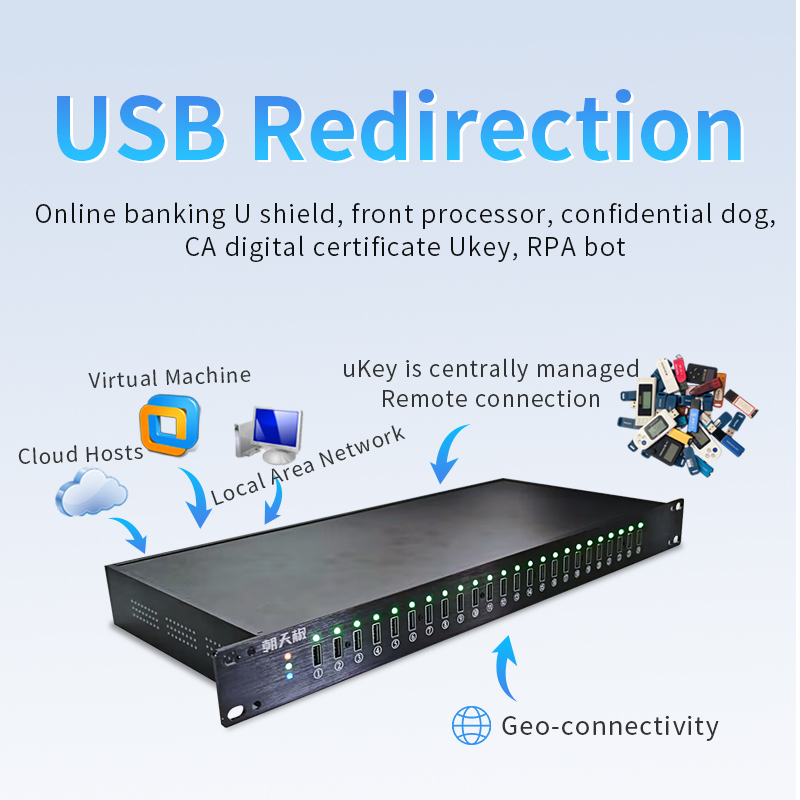
Some companies do not want to keep a PC running just to host a device. In that case, an Ethernet USB device server is the best choice. This is a small box that plugs into gigabit Ethernet. In addition, it has its own USB ports and a power supply. It acts as a permanent home for remote USB tools.
Once you plug your USB dongles into this box, USB Redirector takes over. Then, any user on the network can “claim” a device. Meanwhile, the USBManager Server keeps a log of who did what. This is great for developers who need to manage USB keys for testing. In conclusion, it is clean, simple, and very effective.
Conclusion: The Future of USB Redirector
The change we see today is huge. Indeed, USB Redirector removes the walls that limited our work. It turns local USB ports into assets for the whole network. Consequently, this gives businesses a lot of freedom.
In the future, USB Redirector and the USBManager Server will be even more important. As we use more cloud tech, the need to access remote USB gear will grow. Therefore, if your team needs to share USB dongles or other tools, you need this tech. To sum up, USB Redirector is the best way to stay ahead in a digital world.
