
In the fast-paced world of software engineering, fixing code from a distance has changed everything. Developers no longer need to sit in the same room as the hardware they test. To make this work, a professional USB Redirector has become the main tool for teams. This software bridges the gap between physical tools and virtual code. It allows a developer to plug a debugger into a remote machine and use it as if it were local.
Furthermore, for high-performance teams, the USBManager Server provides the most stable base for these links. A USBManager Server acts as a reliable host that stays online all the time. By combining the flexibility of a USB Redirector with the power of a USBManager Server, companies can work much faster. This setup helps them serve remote clients across the globe easily. Ultimately, using a USB Redirector is the smartest way to improve your development workflow.
The Evolution of Work with USB Redirector
In the past, debugging hardware was a local job. You had to stay near the circuit board or the mobile device. However, the rise of remote work has changed the rules. Now, a USB Redirector allows engineers to stay at home while accessing a lab full of gear. Specifically, this software uses USB over IP technology to “stretch” a USB cable across any distance.
As a result, when you use a USB Redirector, you build a bridge for your data. On the lab side, the hardware is shared. On the developer’s side, the “Client” software picks up the signal. Once the USB Redirector makes this link, the Device Manager sees the hardware as a local tool.
This deep connection is vital. It allows apps like Visual Studio to work without any errors. Moreover, the USB Redirector ensures that the data stays in the right order. This is key for tasks like firmware updates where timing matters.
Why Developers Prefer a USBManager Server Hub
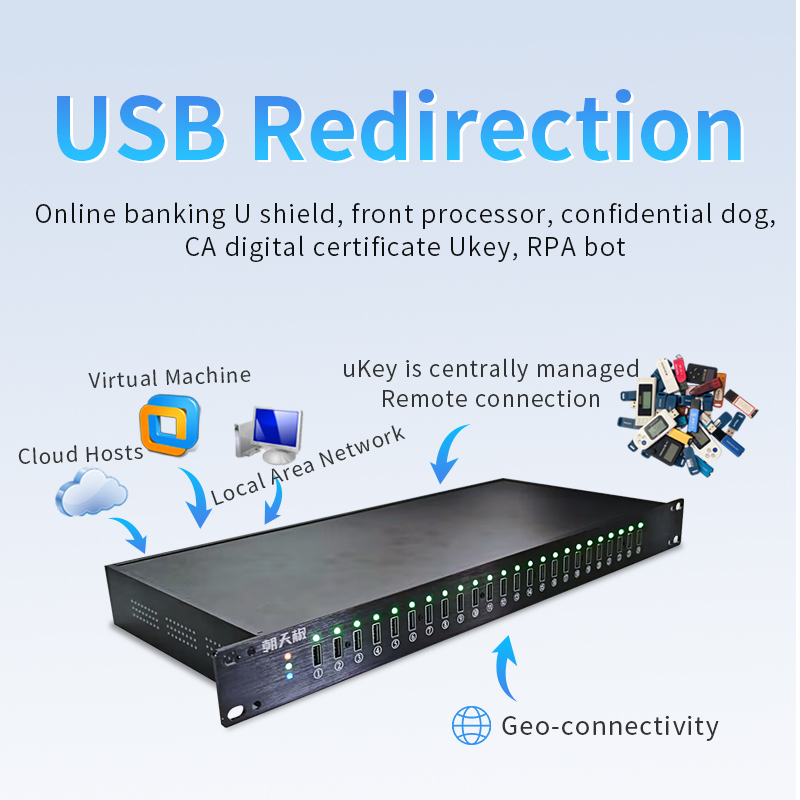
You might try to run your tools on a basic office laptop. But, a laptop is not built for constant server work. It might sleep or lose power. Therefore, a USBManager Server is the professional choice for a remote lab. A USBManager Server is a device made only to host USB links. It does not run heavy apps that cause crashes. In addition, it provides a solid foundation for your USB Redirector setup.
The technical environment of a busy team requires hardware that can handle heat. A USBManager Server is designed with high-quality parts that stay cool. For example, while a normal PC might have weak USB ports, a USBManager Server has strong, industrial slots.
This means the USB Redirector link never breaks because of a loose cable. Consequently, using this hardware saves time. Developers no longer have to ask someone to “unplug and replug” a device. Additionally, these servers use Gigabit Ethernet to keep the data transfer fast. Whether you test USB 2.0 or USB 3.0 tools, a dedicated server makes the process easy.
Major Benefits of USB Redirector in the Dev Cycle
Switching to a professional USB Redirector offers many wins for a coding team. First, it makes resource management simple. Instead of mailing expensive gear to every worker, you can keep them in one spot.
- Resource Sharing: A USB Redirector lets a whole team share one rare prototype. Therefore, you save money on hardware costs.
- Safe Testing: You can keep your hardware on a USBManager Server in a safe room. Meanwhile, developers access it via the USB Redirector. This prevents devices from being lost or damaged.
- Virtual Machine Support: Many devs use VMs for testing. In fact, a USB Redirector is the best way to get hardware to show up inside a virtual space.
Managing Your USB Redirector Debugging Hub
As your project grows, you will have more devices to manage. Fortunately, a professional USB Redirector comes with a clear dashboard. This screen shows which tools are free and which are busy. If a developer finishes their test but stays connected, an admin can use the USB Redirector to free the port.
Because the system uses the TCP IP protocol, it works over any network. However, you should always use a wire for the USBManager Server in a lab. While a USB Redirector can work over Wi-Fi, a wire is much more stable. Thus, it ensures that the data transfer stays consistent. If you follow these simple steps, your USB Redirector hub will be very reliable.
Solving Latency Issues with USB Redirector
Latency is the enemy of a good developer. If the signal takes too long, the debugger might stop. A USB Redirector fixes this by making data packets move better. Specifically, it focuses on low-latency links. By using the software with a USBManager Server, you ensure the best path for your signal.
Another common issue is driver compatibility. Some tools are very picky about how they connect. A USB Redirector solves this by working deep inside the system. It does not matter if you use Linux or Windows. Rather, the USB Redirector makes the tool look like a native device. Consequently, you spend less time fixing drivers and more time writing code.
Conclusion
In conclusion, the USB Redirector is the future of remote debugging. It removes the physical limits of the office. By using the software with a USBManager Server, you build a system that is strong and fast.
Whether you are sharing USB devices for a small startup or a big firm, the USB Redirector gives you control. Instead of being stuck at a desk, start using a USB Redirector today. Soon, you will see how much faster your team can finish high-quality work.
