
Choosing a usb server is very smart. Today, firms need stable remote access. Yet, old sharing methods often fail. Thus, this guide explores the facts. Soon, you will master network sharing.
Why Traditional Methods Fail in Business
First, a standard usb hub limits distance. Next, cables only reach a few meters. Then, signals drop under heavy stress. Sadly, local hubs lack any security. Plus, you cannot share tools remotely. Hence, team collaboration stops very quickly.
Also, software-only tools have many flaws. Often, a usb redirector crashes host PCs. Consequently, your daily workflow breaks instantly. Furthermore, basic passthrough tricks are quite weak. They fail during virtual machine moves. Indeed, old methods drain your IT budget.
Direct Comparison: USB Server vs Hub vs Software
Now, let us compare three main paths. First, the usb hub is very cheap. But, it only works for one desk. Next, software tools offer quick fixes. However, they rely on fragile host computers.
Conversely, a usb server stands alone. Specifically, it plugs directly into your switch. Then, it sends data across your network. Thus, it provides absolute 24/7 uptime. Clearly, hardware wins for serious business tasks.
Stability, Manageability, and Long-Term Cost
Actually, professional hardware saves you money. First, it offers amazing system stability. Next, admins manage everything from one screen. Specifically, they assign strict user access rules. Plus, detailed logs track every single action.
Furthermore, hardware lowers your long-term costs. It stops constant and costly IT repairs. Also, you skip buying many local PCs. Therefore, your network scales up very easily. Ultimately, it protects your vital business data.
Why Choose USB Manager?
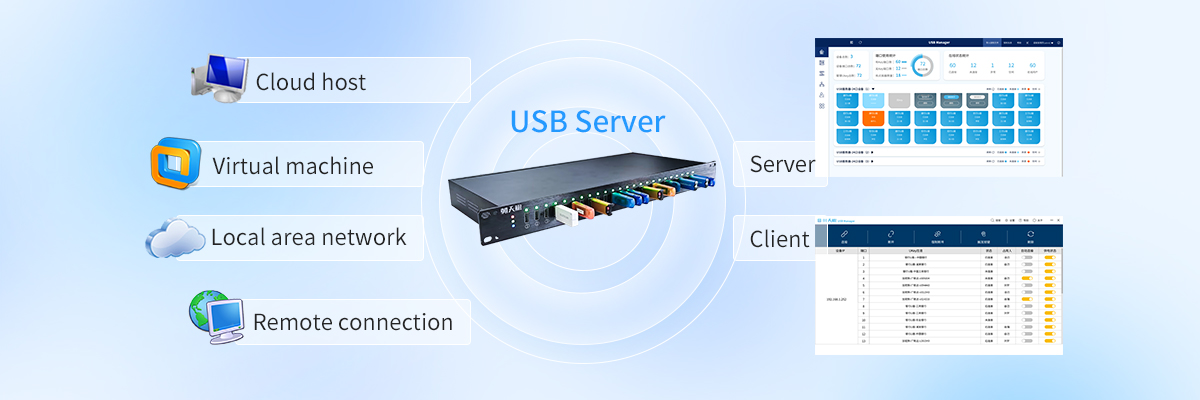
Stop fighting with broken network links. Instead, USB Manager gives you absolute control. Initially, it offers a strong hardware fix. It bypasses all fragile host PC limits.
Next, deployment takes very little time. Additionally, it scales perfectly for large teams. Specifically, it fits 2/8/24/48 port needs. Furthermore, it works with all virtual tools. Consequently, global enterprise teams trust this gear.
Final Recommendation
Picking stable network tools is vital. Unfortunately, old methods fail under pressure. In contrast, real hardware keeps teams running. Ultimately, buying a dedicated server saves cash. Hence, it remains the best sharing choice.
Frequently Asked Questions (FAQ)
Why are old methods unstable?
First, they rely on local host PCs. Then, software patches drop under stress. Thus, connections break during heavy tasks.
What scales best?
A hardware usb server scales best. Specifically, it supports massive global networks. Plus, it offers powerful central management.
Does it support virtual machines?
Yes. Specifically, hardware provides native VM support. Thus, VMware and Hyper-V work perfectly.
