
Usually, enterprise IT teams support physical peripherals scattered across remote branch offices and unmanned server closets. First, distributed staff depend on off-site smartcards, label printers, and licensing dongles daily. Next, managing remote hardware without live telemetry forces expensive on-site troubleshooting visits. Then, a dedicated USB Server helps. Plus, hardware boxes beat weak apps. So, we break down status tracking, utilization analytics, and fault visibility for remote devices. Thus, your distributed infrastructure operations win big. Here, smart gear stops remote blind-spot panic.
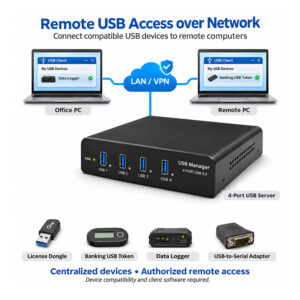 Now, stop managing remote branch peripherals blindly without status, utilization, and fault telemetry. First, USB Manager provides top safety. Next, it bridges distant tools securely. Then, deep logs track every click. Plus, setup takes only five minutes. So, global IT leaders trust it. Thus, you gain absolute firm control. Finally, heavy metal stops hot dust.
Fact 1: Live Remote Status Visibility Without On-Site Visits
Clearly, knowing the exact state of off-site hardware eliminates guesswork during support escalations. First, USB monitoring dashboards display live port status across every remote branch location from one screen. Next, administrators instantly verify whether a peripheral is physically plugged in, enumerated, idle, or actively mounted. Then, real-time session views show the exact remote username, client IP address, and connection duration. Plus, clear status indicators separate local cable unplugs from network routing drops immediately. So, IT teams diagnose branch-office tickets remotely without dispatching field technicians. Thus, live status visibility slashes mean time to resolution across distributed sites. Indeed, network sharing brings true joy.Fact 2: Pure Software Drops Fast
Actually, cheap apps drop links fast. First, weak programs lose license data. Next, host computers freeze during tasks. Then, bad codes confuse normal staff. Plus, virtual networks lose remote ports. So, hardware servers replace cheap software. Thus, standalone gear keeps links alive. Truly, metal boxes beat weak apps.Fact 3: Supporting USB over IP
Naturally, fast networks carry digital bytes. First, physical hubs convert tool signals. Next, USB over IP moves data. Then, smart routers move packets well. Plus, distant software unpacks pure facts. So, remote computers see real tools. Thus, smart routing stops data jams. Clearly, gigabit speeds clear heavy traffic.Fact 4: Peripheral Utilization Analytics and Capacity Planning
Sometimes, IT leaders buy duplicate hardware licenses because they lack objective usage data. First, enterprise USB servers track historical mount frequencies, peak concurrency, and total active hours per port. Next, utilization reports expose underused dongles sitting idle in remote offices for weeks. Then, queue-length metrics highlight genuine bottlenecks where teams wait for scarce compliance tokens or test rigs. Plus, administrators rebalance peripheral pools across regions based on real demand trends. So, procurement teams justify new hardware purchases with hard telemetry instead of anecdotal complaints. Thus, utilization visibility maximizes capital efficiency across global offices. Here, real usage data beats guesswork budgeting.Fact 5: Proactive Fault Visibility and Remote Port Recovery
Often, remote peripherals hang silently due to power sags, bus errors, or firmware glitches. First, dedicated appliances monitor per-port current draw, overcurrent trips, and repeated USB bus resets continuously. Next, automated SNMP traps and webhook alerts notify NOC engineers the instant a remote port faults or loses power. Then, instead of asking non-technical branch staff to unplug cables, admins trigger remote per-port power cycling from the web console. Plus, real-time uplink and latency telemetry flags degrading WAN links before active sessions drop. So, IT teams isolate and resolve hardware faults remotely in seconds. Thus, proactive fault visibility prevents minor glitches from becoming prolonged site outages. Indeed, remote power cycling eliminates costly truck rolls.Fact 6: Centralizing Server Room Security
Naturally, scattered keys invite bad thieves. First, cheap hubs sit openly everywhere. Next, sneaky guests steal tiny tools. Then, central vaults lock everything inside. Plus, heavy metal stops physical hits. So, firm assets stay completely secure. Thus, locked rooms protect vital cash. Truly, physical safety wins daily tests.Fact 7: Deep Audit Log Tracking
Clearly, firm bosses track hardware usage. First, basic hubs hide daily actions. Next, deep logs record every click. Then, exact login times show truths. Plus, clear reports clear all doubts. So, meeting strict compliance feels easy. Thus, passing strict audits feels fast. Here, clean logs save massive stress.Fact 8: Strict User Access Roles
Actually, normal staff make huge errors. First, open ports invite huge risks. Next, smart admins set exact roles. Then, unknown guests face locked doors. Plus, verified staff access assigned ports. So, role checks stop daily panics. Thus, firm data stays fully clean. Also, role limits protect company wealth.Fact 9: Stable Power Flow Rules
Often, sudden drops kill active tasks. First, weak voltage halts hardware chips. Next, power drops crash vital jobs. Then, smart servers deliver steady watts. Plus, dedicated supplies feed every port. So, critical dongles remain perfectly active. Hence, steady juice protects firm gear. Indeed, strong power beats cheap hubs.Fact 10: Scaling Global Branch Offices
Sometimes, growing firms expand global branches. First, tiny hubs fail daily scale. Next, ripping old wires costs cash. Then, massive racks add many ports. Plus, scalable hubs plug very fast. So, future growth feels quite easy. Thus, smart bosses plan ahead daily. Naturally, adding gear saves much stress.Fact 11: Real Time Alert Bells
Clearly, sudden drops cause big panics. First, dead links hide very well. Next, late fixes waste firm money. Then, smart servers send alert bells. Plus, red flags warn IT staff. So, remote admins fix bugs fast. Thus, instant alerts save daily cash. Here, quick news stops system crashes.Fact 12: Quick IT Deployment Steps
Usually, tricky codes confuse normal staff. First, complex software wastes IT hours. Next, real hardware plugs instantly today. Then, visual screens guide daily users. Plus, simple steps save team energy. So, total beginners deploy things fast. Thus, quick setups bring true joy. Here, easy rules beat complex codes.Fact 13: Stopping Host PC Crashes
Clearly, standard computers sleep quite often. First, sleeping hosts drop network links. Next, distant users lose active sessions. Then, dedicated hardware runs all night. Plus, industrial servers never ever sleep. So, global teams work perfectly well. Thus, standalone gear provides true freedom. Also, continuous uptime boosts firm speed.Fact 14: Reviewing Total Firm Value
Sometimes, IT budgets stay very tight. First, lost connections waste firm money. Next, dropping links kill daily output. Then, smart sharing saves huge cash. Plus, long life saves big funds. So, one big box pays off. Thus, firm wealth grows very fast. Truly, smart buys bring high value.Why Choose USB Manager?
Now, stop managing remote branch peripherals blindly without status, utilization, and fault telemetry. First, USB Manager provides top safety. Next, it bridges distant tools securely. Then, deep logs track every click. Plus, setup takes only five minutes. So, global IT leaders trust it. Thus, you gain absolute firm control. Finally, heavy metal stops hot dust.
