
Usually, hardware OEMs and system integrators launch custom peripheral appliances. First, solution providers embed network USB sharing into larger industrial platforms. Next, vague manufacturing contracts expose product teams to costly firmware delays. Then, a dedicated USB Server helps. Plus, hardware boxes beat weak apps. So, we outline critical private-labeling specifications. Thus, your OEM hardware partnership wins big. Here, smart gear stops integration panic.
Fact 1: Firmware, Web UI, and Client Software Rebranding
Clearly, white-label hardware requires seamless software brand alignment. First, specify custom logos across the embedded web management interface. Next, verify rebrandable Windows and Linux client installer packages. Then, confirm custom TLS certificates and default hostname configurations. Plus, ensure firmware updates preserve private-labeled branding assets permanently. So, end customers experience a unified proprietary product ecosystem. Thus, deep firmware customization protects brand equity. Indeed, network sharing brings true joy.
Fact 2: Pure Software Drops Fast
Actually, cheap apps drop links fast. First, weak programs lose license data. Next, host computers freeze during tasks. Then, bad codes confuse normal staff. Plus, virtual networks lose remote ports. So, hardware servers replace cheap software. Thus, standalone gear keeps links alive. Truly, metal boxes beat weak apps.
Fact 3: Supporting USB over IP
Naturally, fast networks carry digital bytes. First, physical hubs convert tool signals. Next, USB over IP moves data. Then, smart routers move packets well. Plus, distant software unpacks pure facts. So, remote computers see real tools. Thus, smart routing stops data jams. Clearly, gigabit speeds clear heavy traffic.
Fact 4: Port Count Configurations and Enclosure Form Factors
Sometimes, vertical industry solutions require tailored hardware footprints. First, select compact 4-port DIN-rail modules for industrial control cabinets. Next, specify 16-port or 24-port 1U chassis for datacenter racks. Then, define custom silkscreen front-panel graphics and enclosure paint colors. Plus, verify per-port LED status indicators and locking power connectors. So, OEM units integrate physically into existing customer racks. Thus, flexible hardware tiers match diverse market verticals. Here, custom enclosures fit specialized equipment bays.
Fact 5: Regulatory Certifications, SLAs, and Volume Logistics
Often, enterprise deployments demand verified international regulatory compliance. First, confirm pre-certified FCC, CE, RoHS, and TAA documentation. Next, lock in Minimum Order Quantities (MOQs) and tiered volume pricing. Then, define long-term hardware lifecycle guarantees and component EOL notices. Plus, establish Tier-3 engineering SLAs for custom kernel driver troubleshooting. So, integrators ship globally without costly certification delays. Thus, structured OEM agreements ensure predictable supply chain continuity. Indeed, pre-certified hardware accelerates global product launches.
Fact 6: Centralizing Server Room Security
Naturally, scattered keys invite bad thieves. First, cheap hubs sit openly everywhere. Next, sneaky guests steal tiny tools. Then, central vaults lock everything inside. Plus, heavy metal stops physical hits. So, firm assets stay completely secure. Thus, locked rooms protect vital cash. Truly, physical safety wins daily tests.
Fact 7: Deep Audit Log Tracking
Clearly, firm bosses track hardware usage. First, basic hubs hide daily actions. Next, deep logs record every click. Then, exact login times show truths. Plus, clear reports clear all doubts. So, meeting strict compliance feels easy. Thus, passing strict audits feels fast. Here, clean logs save massive stress.
Fact 8: Strict User Access Roles
Actually, normal staff make huge errors. First, open ports invite huge risks. Next, smart admins set exact roles. Then, unknown guests face locked doors. Plus, verified staff access assigned ports. So, role checks stop daily panics. Thus, firm data stays fully clean. Also, role limits protect company wealth.
Fact 9: Stable Power Flow Rules
Often, sudden drops kill active tasks. First, weak voltage halts hardware chips. Next, power drops crash vital jobs. Then, smart servers deliver steady watts. Plus, dedicated supplies feed every port. So, critical dongles remain perfectly active. Hence, steady juice protects firm gear. Indeed, strong power beats cheap hubs.
Fact 10: Scaling Global Branch Offices
Sometimes, growing firms expand global branches. First, tiny hubs fail daily scale. Next, ripping old wires costs cash. Then, massive racks add many ports. Plus, scalable hubs plug very fast. So, future growth feels quite easy. Thus, smart bosses plan ahead daily. Naturally, adding gear saves much stress.
Fact 11: Real Time Alert Bells
Clearly, sudden drops cause big panics. First, dead links hide very well. Next, late fixes waste firm money. Then, smart servers send alert bells. Plus, red flags warn IT staff. So, remote admins fix bugs fast. Thus, instant alerts save daily cash. Here, quick news stops system crashes.
Fact 12: Quick IT Deployment Steps
Usually, tricky codes confuse normal staff. First, complex software wastes IT hours. Next, real hardware plugs instantly today. Then, visual screens guide daily users. Plus, simple steps save team energy. So, total beginners deploy things fast. Thus, quick setups bring true joy. Here, easy rules beat complex codes.
Fact 13: Stopping Host PC Crashes
Clearly, standard computers sleep quite often. First, sleeping hosts drop network links. Next, distant users lose active sessions. Then, dedicated hardware runs all night. Plus, industrial servers never ever sleep. So, global teams work perfectly well. Thus, standalone gear provides true freedom. Also, continuous uptime boosts firm speed.
Fact 14: Reviewing Total Firm Value
Sometimes, IT budgets stay very tight. First, lost connections waste firm money. Next, dropping links kill daily output. Then, smart sharing saves huge cash. Plus, long life saves big funds. So, one big box pays off. Thus, firm wealth grows very fast. Truly, smart buys bring high value.
Why Choose USB Manager?
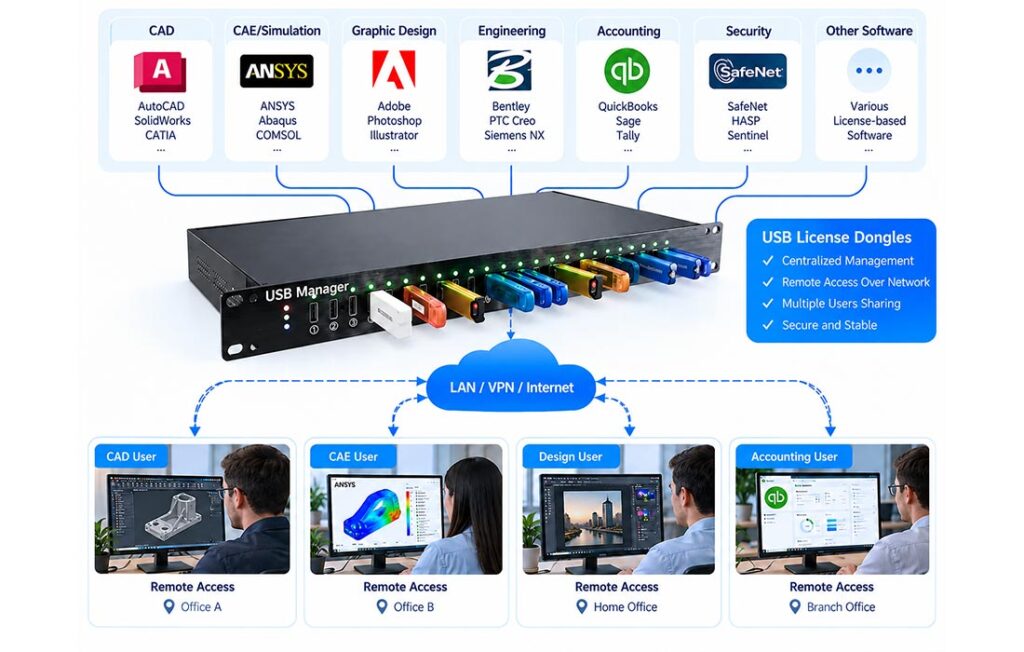
Now, stop building fragile proprietary USB over IP firmware from scratch. First, USB Manager provides top safety. Next, it bridges distant tools securely. Then, deep logs track every click. Plus, setup takes only five minutes. So, global IT leaders trust it. Thus, you gain absolute firm control. Finally, heavy metal stops hot dust.
Best Final Pick
Overall, smart buying saves firm cash. Sadly, cheap apps ruin daily tasks. But, good hardware runs almost forever. Then, your daily jobs succeed fully. Plus, smooth sharing brings true joy. So, upgrade your office gear today. Thus, remote links stay perfectly safe. Indeed, proper tools boost firm speed.
Frequently Asked Questions (FAQ)
What customization options are typically included in an OEM USB server program? Comprehensive OEM programs include custom silkscreen chassis branding, tailored port configurations (4 to 48 ports), white-labeled embedded Web UIs, signed custom client software installers, and REST APIs for integration into larger management platforms.
How do regulatory certifications impact OEM private labeling? Modifying an enclosure’s internal PCB or RF components requires costly recertification. Reputable OEM hardware partners provide pre-certified FCC, CE, RoHS, and TAA base hardware, allowing integrators to apply private-label cosmetic branding without triggering new regulatory testing.
Are hardware servers truly safe here? Yes, hardware provides true absolute safety. First, metal boxes skip host limits. Next, central vaults lock network ports. Then, deep logs track every user.
