
Usually, enterprise technology buyers compare peripheral redirection architectures. First, teams connect distant tools across modern offices. Next, software utilities introduce host maintenance friction. Then, a dedicated USB Server helps. Plus, hardware boxes beat weak apps. So, we compare software tools and hardware appliances. Thus, your infrastructure procurement decision wins big. Here, smart gear stops endpoint dependency panic.
Fact 1: Software Forwarding and Endpoint OS Dependency
Clearly, tools like USB Network Gate require host machines. First, administrators install software services onto existing Windows workstations. Next, host computers must remain powered continuously. Then, background services capture local USB Request Blocks. Plus, driver updates require host administrator rights. So, sharing depends entirely on host health. Thus, software redirection inherits workstation downtime vulnerabilities. Indeed, network sharing brings true joy.
Fact 2: Pure Software Drops Fast
Actually, cheap apps drop links fast. First, weak programs lose license data. Next, host computers freeze during tasks. Then, bad codes confuse normal staff. Plus, virtual networks lose remote ports. So, hardware servers replace cheap software. Thus, standalone gear keeps links alive. Truly, metal boxes beat weak apps.
Fact 3: Supporting USB over IP
Naturally, fast networks carry digital bytes. First, physical hubs convert tool signals. Next, USB over IP moves data. Then, smart routers move packets well. Plus, distant software unpacks pure facts. So, remote computers see real tools. Thus, smart routing stops data jams. Clearly, gigabit speeds clear heavy traffic.
Fact 4: Centralized Policy Management and RBAC Governance
Sometimes, decentralized software agents lack unified administrative controls. First, unmanaged software daemons expose configurations locally. Next, administrators struggle to push global security policies. Then, dedicated hardware appliances feature embedded management consoles. Plus, administrators map ports directly to Active Directory. So, role-based access rules enforce strict isolation. Thus, hardware appliances guarantee centralized operational compliance. Here, central policies prevent unauthorized port hijacking.
Fact 5: Enterprise Rack Deployment and Power Regulation
Often, shared workstation hosts suffer physical vulnerabilities. First, office desktop computers sit in open areas. Next, accidental cable bumps disconnect production dongles. Then, dedicated 1U appliances mount securely in datacenters. Plus, regulated power supplies deliver clean 5V electricity. So, critical banking tokens stay protected forever. Thus, purpose-built hardware delivers true datacenter reliability. Indeed, rackmount appliances ensure 24/7 business uptime.
Fact 6: Centralizing Server Room Security
Naturally, scattered keys invite bad thieves. First, cheap hubs sit openly everywhere. Next, sneaky guests steal tiny tools. Then, central vaults lock everything inside. Plus, heavy metal stops physical hits. So, firm assets stay completely secure. Thus, locked rooms protect vital cash. Truly, physical safety wins daily tests.
Fact 7: Deep Audit Log Tracking
Clearly, firm bosses track hardware usage. First, basic hubs hide daily actions. Next, deep logs record every click. Then, exact login times show truths. Plus, clear reports clear all doubts. So, meeting strict compliance feels easy. Thus, passing strict audits feels fast. Here, clean logs save massive stress.
Fact 8: Strict User Access Roles
Actually, normal staff make huge errors. First, open ports invite huge risks. Next, smart admins set exact roles. Then, unknown guests face locked doors. Plus, verified staff access assigned ports. So, role checks stop daily panics. Thus, firm data stays fully clean. Also, role limits protect company wealth.
Fact 9: Stable Power Flow Rules
Often, sudden drops kill active tasks. First, weak voltage halts hardware chips. Next, power drops crash vital jobs. Then, smart servers deliver steady watts. Plus, dedicated supplies feed every port. So, critical dongles remain perfectly active. Hence, steady juice protects firm gear. Indeed, strong power beats cheap hubs.
Fact 10: Scaling Global Branch Offices
Sometimes, growing firms expand global branches. First, tiny hubs fail daily scale. Next, ripping old wires costs cash. Then, massive racks add many ports. Plus, scalable hubs plug very fast. So, future growth feels quite easy. Thus, smart bosses plan ahead daily. Naturally, adding gear saves much stress.
Fact 11: Real Time Alert Bells
Clearly, sudden drops cause big panics. First, dead links hide very well. Next, late fixes waste firm money. Then, smart servers send alert bells. Plus, red flags warn IT staff. So, remote admins fix bugs fast. Thus, instant alerts save daily cash. Here, quick news stops system crashes.
Fact 12: Quick IT Deployment Steps
Usually, tricky codes confuse normal staff. First, complex software wastes IT hours. Next, real hardware plugs instantly today. Then, visual screens guide daily users. Plus, simple steps save team energy. So, total beginners deploy things fast. Thus, quick setups bring true joy. Here, easy rules beat complex codes.
Fact 13: Stopping Host PC Crashes
Clearly, standard computers sleep quite often. First, sleeping hosts drop network links. Next, distant users lose active sessions. Then, dedicated hardware runs all night. Plus, industrial servers never ever sleep. So, global teams work perfectly well. Thus, standalone gear provides true freedom. Also, continuous uptime boosts firm speed.
Fact 14: Reviewing Total Firm Value
Sometimes, IT budgets stay very tight. First, lost connections waste firm money. Next, dropping links kill daily output. Then, smart sharing saves huge cash. Plus, long life saves big funds. So, one big box pays off. Thus, firm wealth grows very fast. Truly, smart buys bring high value.
Why Choose USB Manager?
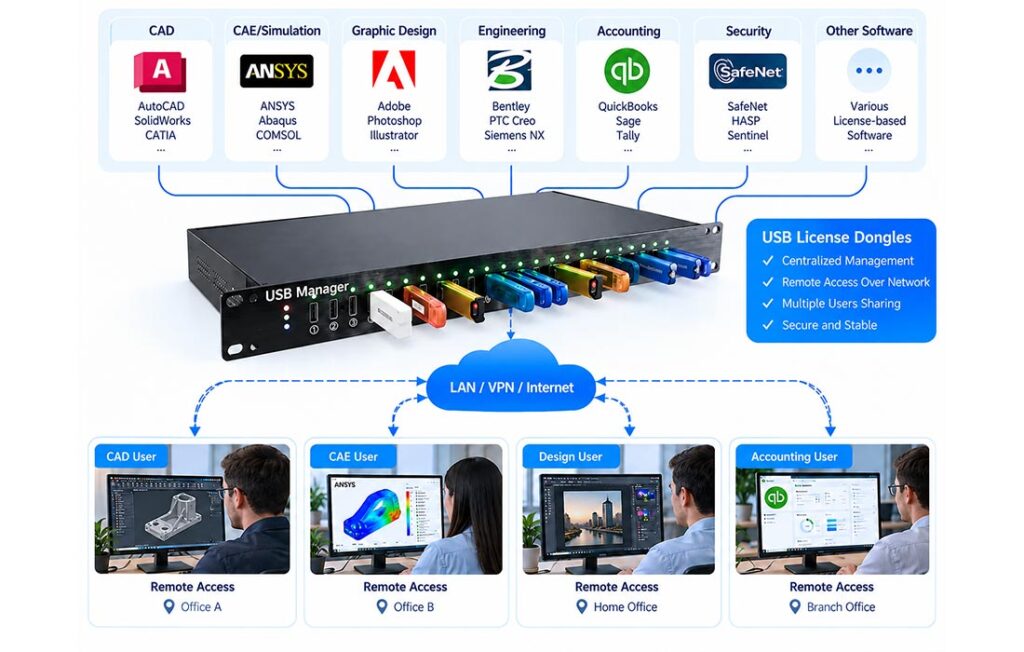
Now, stop relying on vulnerable workstation software forwarders. First, USB Manager provides top safety. Next, it bridges distant tools securely. Then, deep logs track every click. Plus, setup takes only five minutes. So, global IT leaders trust it. Thus, you gain absolute firm control. Finally, heavy metal stops hot dust.
Best Final Pick
Overall, smart buying saves firm cash. Sadly, cheap apps ruin daily tasks. But, good hardware runs almost forever. Then, your daily jobs succeed fully. Plus, smooth sharing brings true joy. So, upgrade your office gear today. Thus, remote links stay perfectly safe. Indeed, proper tools boost firm speed.
Frequently Asked Questions (FAQ)
What is the core difference between USB Network Gate and a dedicated USB server? USB Network Gate is software installed on existing host computers to redirect connected USB ports across the network. A dedicated USB server is an independent, bare-metal hardware appliance connecting directly to network switches without host PC dependencies.
Why do enterprise IT teams prefer dedicated hardware over software redirection? Dedicated appliances eliminate unexpected host operating system updates, sleep cycles, and driver bloat. They provide centralized web-based management, integrated Active Directory authentication, hardware-level power regulation, and datacenter rack mounting.
Are hardware servers truly safe here? Yes, hardware provides true absolute safety. First, metal boxes skip host limits. Next, central vaults lock network ports. Then, deep logs track every user.
