
Usually, MSPs and technical support teams evaluate remote peripheral tooling. First, field technicians diagnose customer equipment across distant client sites. Next, temporary software redirectors introduce cumbersome manual workflows. Then, a dedicated USB Server helps. Plus, hardware boxes beat weak apps. So, we compare technician software and permanent appliances. Thus, your technical service infrastructure wins big. Here, smart gear stops support panic.
Fact 1: The Temporary Remote Technician Workflow
Clearly, USB Redirector Technician Edition targets ad-hoc diagnostics. First, support technicians send lightweight client forwarders to end-users. Next, end-users run temporary executables on remote customer laptops. Then, technicians forward smartphones or diagnostic tools remotely. Plus, sessions terminate immediately after repair tasks conclude. So, technician software suits fast, break-fix support calls. Thus, ad-hoc redirection solves temporary field troubleshooting tasks. Indeed, network sharing brings true joy.
Fact 2: Pure Software Drops Fast
Actually, cheap apps drop links fast. First, weak programs lose license data. Next, host computers freeze during tasks. Then, bad codes confuse normal staff. Plus, virtual networks lose remote ports. So, hardware servers replace cheap software. Thus, standalone gear keeps links alive. Truly, metal boxes beat weak apps.
Fact 3: Supporting USB over IP
Naturally, fast networks carry digital bytes. First, physical hubs convert tool signals. Next, USB over IP moves data. Then, smart routers move packets well. Plus, distant software unpacks pure facts. So, remote computers see real tools. Thus, smart routing stops data jams. Clearly, gigabit speeds clear heavy traffic.
Fact 4: Permanent 24/7 Enterprise Infrastructure
Sometimes, support teams require permanent backend peripheral access. First, enterprise ERP licenses and diagnostic dongles remain plugged continuously. Next, expecting end-users to launch client software daemons introduces friction. Then, dedicated hardware appliances operate autonomously inside server racks. Plus, virtualized support environments access diagnostic keys round-the-clock. So, permanent appliances require zero customer interaction. Thus, hardware infrastructure supports enterprise multi-tenant automation. Here, standalone hardware guarantees uninterrupted technical operations.
Fact 5: Customer Endpoint Permissions and Security Footprint
Often, enterprise customers restrict running third-party software executables. First, corporate endpoint policies block unsigned customer forwarders. Next, temporary software installations trigger antivirus and EDR alerts. Then, on-premise hardware appliances eliminate customer endpoint software entirely. Plus, internal support clusters mount peripherals behind enterprise firewalls. So, customer laptops remain completely untouched during operations. Thus, hardware architectures preserve strict enterprise compliance standards. Indeed, appliance infrastructure eliminates customer endpoint friction.
Fact 6: Centralizing Server Room Security
Naturally, scattered keys invite bad thieves. First, cheap hubs sit openly everywhere. Next, sneaky guests steal tiny tools. Then, central vaults lock everything inside. Plus, heavy metal stops physical hits. So, firm assets stay completely secure. Thus, locked rooms protect vital cash. Truly, physical safety wins daily tests.
Fact 7: Deep Audit Log Tracking
Clearly, firm bosses track hardware usage. First, basic hubs hide daily actions. Next, deep logs record every click. Then, exact login times show truths. Plus, clear reports clear all doubts. So, meeting strict compliance feels easy. Thus, passing strict audits feels fast. Here, clean logs save massive stress.
Fact 8: Strict User Access Roles
Actually, normal staff make huge errors. First, open ports invite huge risks. Next, smart admins set exact roles. Then, unknown guests face locked doors. Plus, verified staff access assigned ports. So, role checks stop daily panics. Thus, firm data stays fully clean. Also, role limits protect company wealth.
Fact 9: Stable Power Flow Rules
Often, sudden drops kill active tasks. First, weak voltage halts hardware chips. Next, power drops crash vital jobs. Then, smart servers deliver steady watts. Plus, dedicated supplies feed every port. So, critical dongles remain perfectly active. Hence, steady juice protects firm gear. Indeed, strong power beats cheap hubs.
Fact 10: Scaling Global Branch Offices
Sometimes, growing firms expand global branches. First, tiny hubs fail daily scale. Next, ripping old wires costs cash. Then, massive racks add many ports. Plus, scalable hubs plug very fast. So, future growth feels quite easy. Thus, smart bosses plan ahead daily. Naturally, adding gear saves much stress.
Fact 11: Real Time Alert Bells
Clearly, sudden drops cause big panics. First, dead links hide very well. Next, late fixes waste firm money. Then, smart servers send alert bells. Plus, red flags warn IT staff. So, remote admins fix bugs fast. Thus, instant alerts save daily cash. Here, quick news stops system crashes.
Fact 12: Quick IT Deployment Steps
Usually, tricky codes confuse normal staff. First, complex software wastes IT hours. Next, real hardware plugs instantly today. Then, visual screens guide daily users. Plus, simple steps save team energy. So, total beginners deploy things fast. Thus, quick setups bring true joy. Here, easy rules beat complex codes.
Fact 13: Stopping Host PC Crashes
Clearly, standard computers sleep quite often. First, sleeping hosts drop network links. Next, distant users lose active sessions. Then, dedicated hardware runs all night. Plus, industrial servers never ever sleep. So, global teams work perfectly well. Thus, standalone gear provides true freedom. Also, continuous uptime boosts firm speed.
Fact 14: Reviewing Total Firm Value
Sometimes, IT budgets stay very tight. First, lost connections waste firm money. Next, dropping links kill daily output. Then, smart sharing saves huge cash. Plus, long life saves big funds. So, one big box pays off. Thus, firm wealth grows very fast. Truly, smart buys bring high value.
Why Choose USB Manager?
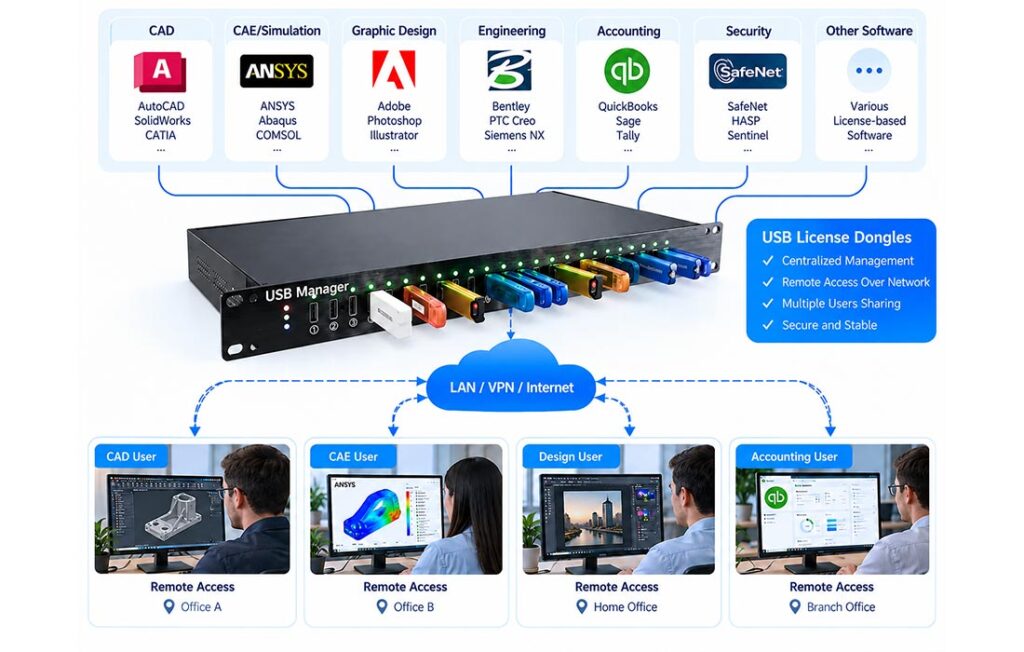
Now, stop juggling fragile temporary software executables during support escalations. First, USB Manager provides top safety. Next, it bridges distant tools securely. Then, deep logs track every click. Plus, setup takes only five minutes. So, global IT leaders trust it. Thus, you gain absolute firm control. Finally, heavy metal stops hot dust.
Best Final Pick
Overall, smart buying saves firm cash. Sadly, cheap apps ruin daily tasks. But, good hardware runs almost forever. Then, your daily jobs succeed fully. Plus, smooth sharing brings true joy. So, upgrade your office gear today. Thus, remote links stay perfectly safe. Indeed, proper tools boost firm speed.
Frequently Asked Questions (FAQ)
What is the difference between USB Redirector Technician Edition and a hardware USB server? USB Redirector Technician Edition is a software utility designed for remote technicians to connect to customer USB devices temporarily for troubleshooting. A hardware USB server is an on-premise, rack-mounted appliance designed for 24/7 permanent peripheral sharing and virtualization across enterprise networks.
Can MSPs use a hardware USB server for remote client troubleshooting? Hardware USB servers are designed for internal infrastructure, hosting company-owned diagnostic dongles, and lab equipment. For temporary customer-premises troubleshooting, MSPs typically pair technician software with centralized on-premise hardware hubs in their NOC.
Are hardware servers truly safe here? Yes, hardware provides true absolute safety. First, metal boxes skip host limits. Next, central vaults lock network ports. Then, deep logs track every user.
